
Radiation therapy has been a cornerstone of cancer treatment for decades. It can shrink tumors before surgery, destroy remaining cancer cells afterward or, in some cases, be a curative option when surgery isn't possible.
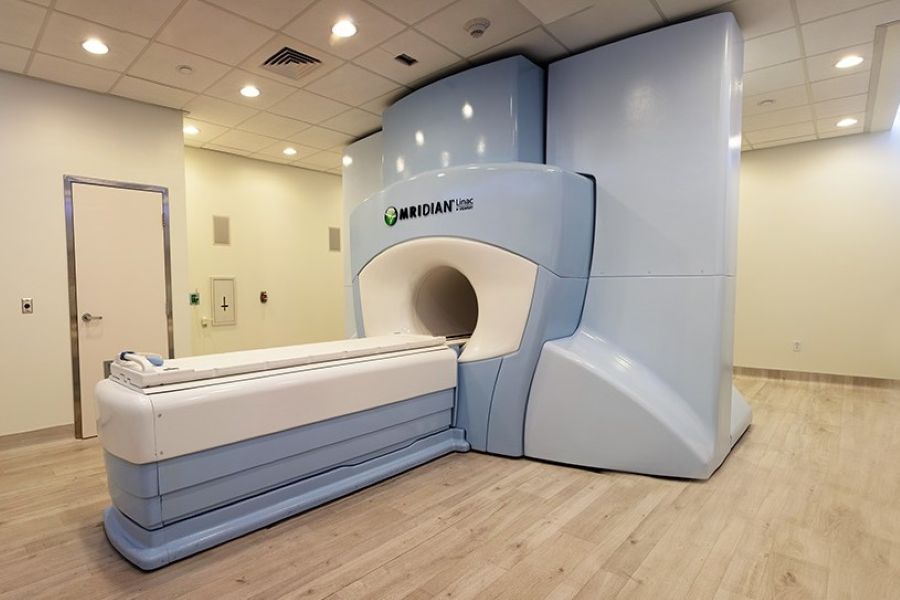
Today, advances in technology are making radiation therapy even more precise. MR-guided radiation therapy is one such advancement that is offered at Northside Hospital.
"MR-guided radiation therapy allows us to adapt treatment to each patient's anatomy in real time every day, helping us deliver radiation more precisely while reducing unnecessary exposure to healthy tissue," said Dr. Ajaykumar Patel, radiation oncologist at Northside Hospital Cancer Institute.
The therapy combines high-contrast MRI imaging with a linear accelerator — MRI-linac — which produces high-energy x-rays, or electron beams, that target tumors. This combination allows physicians to see tumors more clearly during treatment and make real-time adjustments that help protect healthy tissue while accurately targeting cancer.
Why MRI guidance matters
Traditional radiation therapy typically relies on CT imaging. While CT scans provide excellent images of bones and dense structures, they can make it more difficult to distinguish soft tissues.
The MRI-linac provides much greater detail of soft tissues, allowing physicians to better visualize the boundaries of a tumor, which tells them its exact size and location, as well as where healthy tissue begins.
That improved visibility helps clinicians deliver radiation with greater precision.
Continuous imaging keeps treatment on target
Tumors in the chest and abdomen, including those in the lungs, liver and pancreas, naturally move as patients breathe.
With MR-guided radiation therapy, physicians can watch the tumor in real time throughout treatment. If the tumor moves outside the planned treatment area, the system automatically pauses the radiation beam and resumes only after the tumor returns to the correct position.
Traditional radiation systems cannot continuously monitor internal anatomy during treatment. Because of this, larger treatment margins are often needed to account for movement, increasing the amount of healthy tissue exposed to radiation.
Treatment plans can adapt each day
A patient's anatomy can change throughout a course of radiation treatment. Tumors may shrink, and organs such as the bladder and bowel naturally shift from day to day.
Before each treatment session, the MRI-linac captures a new MRI scan. If changes are detected, the care team can adjust the treatment plan in real-time while the patient remains on the treatment table.
This adaptive approach helps ensure the prescribed radiation dose remains focused on the tumor while minimizing exposure to surrounding healthy tissue.
Clinical studies show fewer side effects
By blending live imaging and real-time adjustments, MR-guided radiation therapy offers patients both highly effective tumor control and potential for higher quality of life during and after treatment — and research shows this. Studies have demonstrated that this therapy can reduce treatment-related side effects while maintaining excellent tumor control.
The Phase III MIRAGE trial, for example, compared MRI-guided stereotactic body radiation therapy (SBRT) with traditional CT-guided SBRT in men with localized prostate cancer. The research found that MRI guidance led to:
- Lower rates of moderate urinary side effects during treatment (24.4% versus 43.4%).
- No moderate gastrointestinal side effects during treatment, compared with 10.5% in the CT-guided group
- Lower rates of long-term urinary side effects (27% versus 51%).
- Lower rates of long-term gastrointestinal side effects (1.4% versus 9.5%).
Another study, the SMART trial, evaluated MR-guided SBRT in patients with pancreatic cancer, which presents unique challenges because tumors are often located close to sensitive organs such as the stomach and small intestine.
The research found an 83% local tumor control rate one year after treatment. Just as importantly, only 2.2% of patients experienced severe gastrointestinal side effects that were considered probably related to treatment. Previous studies of conventional CT-guided SBRT have reported severe gastrointestinal complication rates of 30% or higher.
A promising frontier for expanding treatment options
In addition to prostate and pancreatic cancers, MR-guided radiation therapy can also be used to treat cancers of the:
- Liver
- Bile ducts
- Lung
- Other metastatic tumors
As research continues to expand the role of MR-guided SBRT, radiation therapy is becoming increasingly personalized. The ability to continuously visualize tumors and adapt treatment in real time allows physicians to deliver highly precise radiation while helping reduce side effects, making it safer, faster and more effective for patients facing a difficult diagnosis.
With MR-guided radiation therapy now available at Northside Hospital, patients have access to this advanced treatment option close to home.
To learn more about whether MR-guided radiation therapy may be appropriate for your treatment plan, talk with your Northside Hospital radiation oncologist.
LEARN MORE ABOUT RADIATION THERAPY AT NORTHSIDE.

