
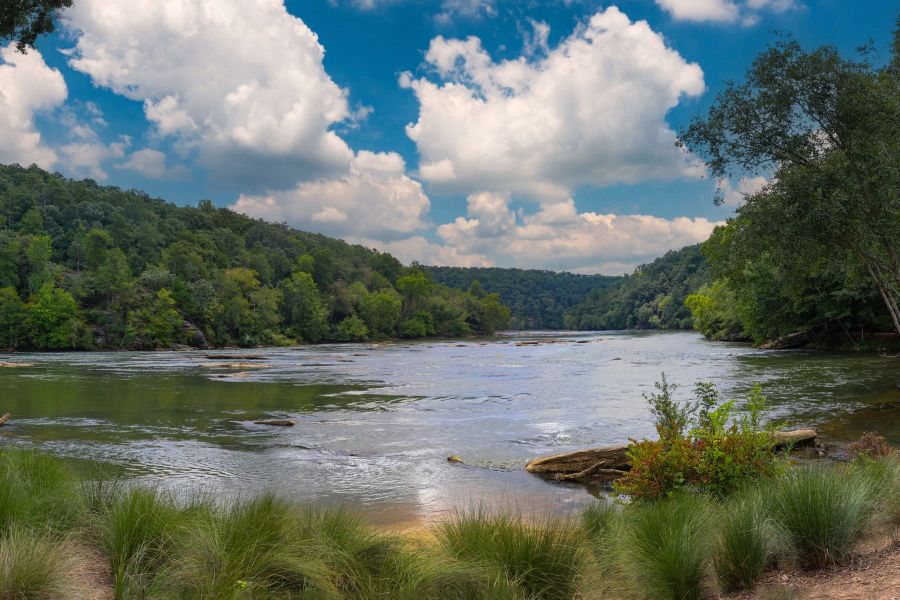
"Feces contamination” is likely the last phrase anyone shooting the Hooch wants to hear this summer. Unfortunately, when it comes to tubing and swimming in the most heavily used water resource in Georgia, it’s something river goers need to know. If there’s been a contamination spike, the Chattahoochee’s infected waters can have a significant effect on your health.
“Absolutely, one should be concerned if the levels are high,” Dr. Avanthi Doppalapudi said, speaking on the Chattahoochee River’s E. coli levels. The Chattahoochee Riverkeeper’s Neighborhood Water Watch — as well as the BacteriALERT program — monitors this group of infectious bacteria, offering timely data on the safety level of the water system.
According to Doppalapudi, a Northside Hospital infectious disease expert, E. coli isn’t the only issue. An indicator organism, surveyors like Neighborhood Water Watch monitor E. coli to gauge a larger problem: fecal contamination.
"It's coming from the feces of warm-blooded animals,” she said, speaking on E. coli. Wildlife, livestock, pets, people — the bacteria can spread throughout Georgia’s water systems in many ways. From cryptosporidium to cyclospora, the river’s contamination can lead to many health hazards for people — and their pets — that extend beyond E. coli. According to the Chattahoochee Riverkeeper’s list of threats and challenges to the water system, much of the Chattahoochee remains a potential health concern.
“Although river health has improved in recent decades, more than 1,000 miles of waterways within the Chattahoochee watershed still do not meet water-quality standards,” the riverkeeper’s website said. “And that means potential health threats to people and wildlife that come in contact with it.”
Those potential health threats remain relevant every month of every year.
"One important thing for readers to know is this is a year-long problem, especially in Georgia,” Doppalapudi said. It’s when the rain comes that swimmers and tubers should be the most wary.
“That is the time period when you need to avoid going into these streams and waters for 24 to 48 hours, at least after heavy rain,” Doppalapudi said. “Sometimes the monitoring, the news... there could be a delay, so you don't want to be exposed before the news is even out."
If you’ve recently swum in the Chattahoochee River and are experiencing infection symptoms, such as severe diarrhea or fever, seek medical care. Experiencing an intense thirst, for instance, can be a sign that severe diarrhea has possibly led to dehydration.
"Those are the main symptoms I would really be concerned with, which are common symptoms, but never should be overlooked,” she said. “You can get worse, go into dehydration, shock and sepsis if you are neglecting care.”

