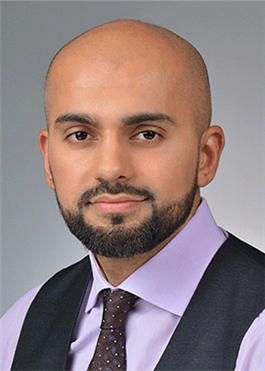
Northside Hospital physician and researcher Abubakr Chaudhry, MD, MS, CPE, CPHIMS, is helping shape the future of inpatient safety through newly published research in NEJM Catalyst Innovations in Care Delivery, one of healthcare’s leading journals focused on improving patient outcomes.
In the article, “A Structured Deterioration Response Program Across a Multihospital System to Reduce Inpatient Mortality,” Dr. Chaudhry and co-author Samantha McInnis examine the impact of the Discover, Evaluate, Triage, Evaluate and Respond program, known as DETER. The program was developed and implemented across Northside’s five-campus system as a structured response model for hospitalized patients at risk of clinical deterioration.
DETER uses real-time patient acuity data, including predictive analytics, to help clinicians identify subtle signs of decline earlier. Once a patient is flagged, nurses and physicians follow a standardized process to assess the patient, determine the appropriate level of concern, escalate care when needed and activate rapid-response resources before the patient becomes critically ill.
“Innovation in healthcare isn’t simply about new technology. It’s about designing better systems that help clinicians deliver the right care at the right time. DETER shows that combining predictive analytics with structured clinical thinking can fundamentally improve patient outcomes,” said Dr. Chaudhry, who also serves as chair of internal medicine at Northside.
The retrospective study analyzed nearly 100,000 inpatient admissions and found the DETER program was associated with a 41% relative reduction in inpatient mortality. Patients cared for under the program also experienced shorter hospital stays, fewer unplanned intensive care unit transfers and fewer upgrades to higher levels of care. At the same time, rapid-response team activations increased, reflecting earlier recognition of patient decline and more timely clinical intervention.
“When we first envisioned DETER, we dreamed of creating a program that could truly change patient outcomes. Seeing it associated with a 41% relative reduction in inpatient mortality is incredibly rewarding and a testament to what can be accomplished when nurses, physicians and care teams work together with a shared commitment to patient safety,” said Sandy Gandee, R.N., lead clinical nurse specialist at Northside.
Rather than relying solely on predictive technology, the DETER model combines real-time patient acuity data with structured clinical assessments, standardized communication and clearly defined escalation protocols. The framework empowers nurses, physicians and rapid-response teams to work together using a consistent process designed to improve decision-making and accelerate care when patients begin to deteriorate.
“The success of DETER demonstrates the value of combining clinical expertise with a structured approach to patient deterioration. By promoting earlier recognition and appropriate rapid-response activation, we’ve created a more proactive model of care that has strengthened patient safety and improved outcomes,” said Dr. Spencer Lee, a pulmonary disease and critical care specialist at Northside Hospital Cherokee.
The publication highlights Northside Hospital’s commitment to advancing patient safety through innovation, collaboration and evidence-based care. By sharing the results with the broader healthcare community, Dr. Chaudhry hopes the DETER framework can serve as a scalable model for health systems seeking to improve clinical outcomes while strengthening communication across care teams.
To learn more, read the full article in NEJM Catalyst Innovations in Care Delivery on how the DETER program is transforming the recognition of and response to patient deterioration and helping improve outcomes across the Northside system.
The team also recognized Sandy Gandee, R.N.; Daniella Johnson, R.N.; Dr. Spencer Lee; Dr. Seraj El-Oshar; Dr. Sunil Vallurupalli; Kara Desouza, R.N.; Dr. Nick Taher; Anne Hysong; Margaret Henry; Beverly Hunt; Carolyn Booker, DNP; Janis Dubow; and Deidre Dixon for their invaluable contributions to program implementation, support, clinician education, workflow development and data coordination.