
When a patient was diagnosed with a large invasive esophageal adenocarcinoma, the tumor’s size and characteristics would typically have called for an esophagectomy — a major operation in which much of the esophagus is removed and the stomach is repositioned to reconstruct the digestive tract.
Instead, the patient was treated with endoscopic submucosal dissection, or ESD, by Dr. Justin Forde with the Advanced Center for Interventional Pulmonary and Gastrointestinal Services at Northside Hospital Gwinnett. By using third-space endoscopy, the team was able to work from inside the esophagus and carefully remove the tumor with negative margins.
"This organ-sparing technique directly benefited the patient by completely removing the cancer while avoiding a high-risk surgical procedure and preserving their natural anatomy," said Dr. Forde.
Growing expertise, expanding capabilities
Third-space procedures use an endoscope or colonoscope to access the “third space,” between the inner lining and muscle layers of the GI tract, allowing physicians to treat certain conditions without external incisions.
Since its launch in 2024, the program has experienced explosive growth, consistently climbing in procedure volume year over year. The team recently surpassed 350 procedures, a milestone Dr. Forde said represents the program's evolution from a new service into an experienced center for advanced endoscopy.
The experience gained through hundreds of complex cases has helped the team refine its techniques and push the boundaries of what can be addressed with minimally invasive techniques.
"By continually adding these highly specialized interventions, the program ensures that Northside patients have immediate access to a broader range of advanced therapeutic endoscopy options within the same health system," Dr. Forde said.
Today, the program treats patients with complex motility disorders and structural abnormalities throughout the digestive system. Most commonly, the unit treats severe achalasia, gastroparesis and Zenker’s diverticulum, as well as suspicious gastrointestinal lesions with characteristics concerning for early cancer.
"Each week, these procedures help restore a person's ability to eat comfortably, treat early-stage malignancies from the inside out, and help patients safely avoid high-risk, invasive surgeries," Dr. Forde said.
Keeping specialized care close to home
Advanced third-space procedures require extensive training and specialized expertise, which can make access to these treatments challenging for patients. Having that expertise at Northside means patients can receive advanced endoscopic treatment by their trusted providers rather than having to travel to another medical center for specialized care.
For Dr. Forde and his team, the most rewarding outcome is giving people back their quality of life, their health and their peace of mind.
LEARN MORE ABOUT ADVANCED GI SERVICES AT NORTHSIDE.
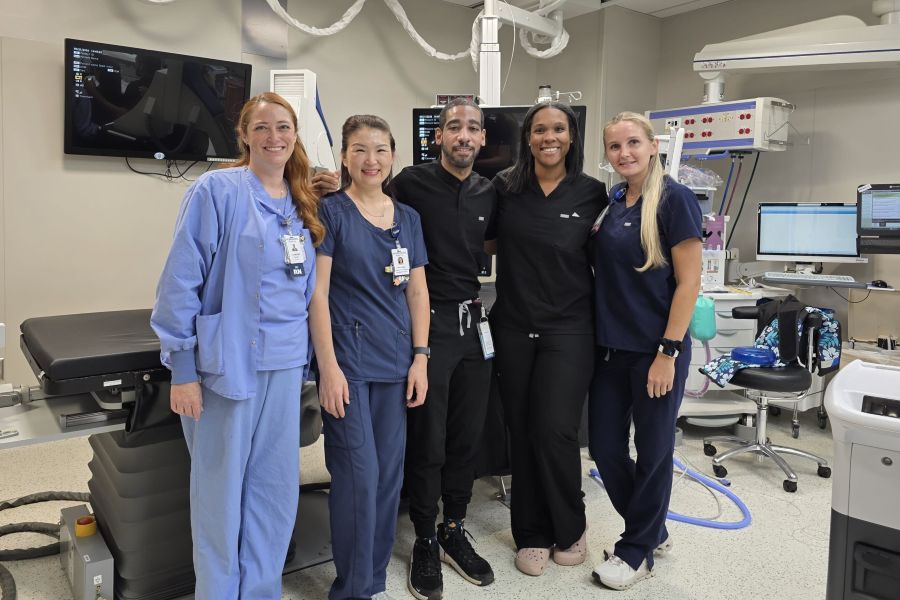
Pictured above, from left: Courteny Sykes, R.N., interventional GI nurse; Hyunjin Chung, interventional GI nurse navigator; Dr. Justin J. Forde, medical director of the Interventional GI Endoscopy Program and advanced endoscopist; Jalina Ramey, operations supervisor; and Julian Tonjes, R.N., interventional GI nurse.

