
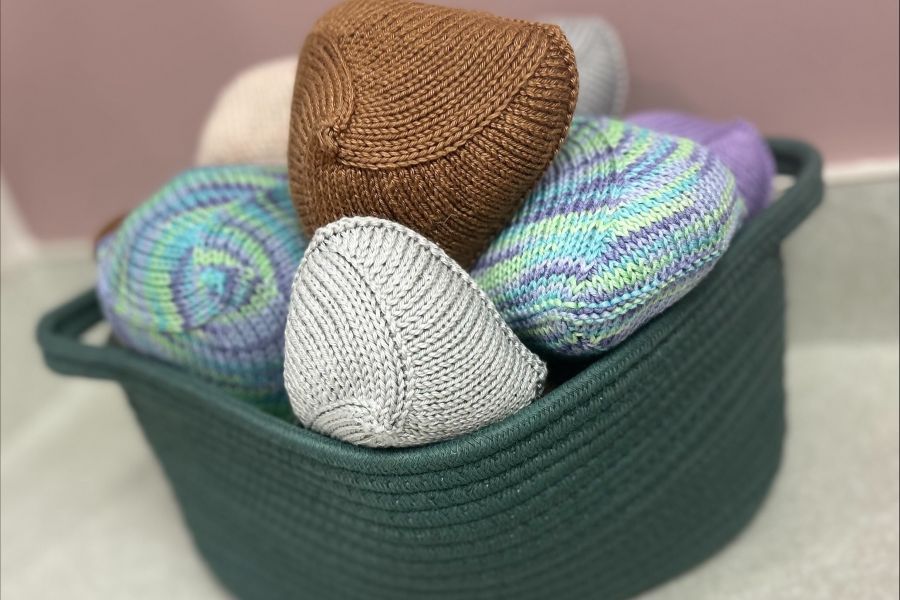
Amy Roberts rarely sits in a doctor's waiting room with idle hands. Instead, she reaches for a skein of soft cotton yarn, carefully looping it around her knitting needles until a small dome takes shape.
Strangers often ask what she's making. When she explains that she's knitting a "knocker," the conversation frequently leads to a request for a pair, either for the person asking or for someone they love.
For women adjusting to life after breast cancer surgery, Knitted Knockers can offer comfort, confidence and a sense of normalcy during a vulnerable time. Many of the volunteers who knit them understand that journey firsthand, having faced breast cancer themselves.
Amy, 78, is one of them. She and several other members of the North Georgia Knitting Guild make the inserts and donate them to women in their community, including patients at Northside's Cherokee Breast Care and Georgia Cancer Specialists in Cherokee County.
A two-time breast cancer survivor, Amy has made about 300 of them since 2014.
"I know what it is like to receive that diagnosis and go through mastectomy surgery, chemo and recovery," she said.
A bridge after surgery
Lisa Dailey, 48, was diagnosed with breast cancer in both breasts in May 2026. The news was overwhelming, she said, but it made her decision clear. She chose a double mastectomy, surgery to remove both breasts, "to do everything possible to remove the cancer and move forward with confidence."
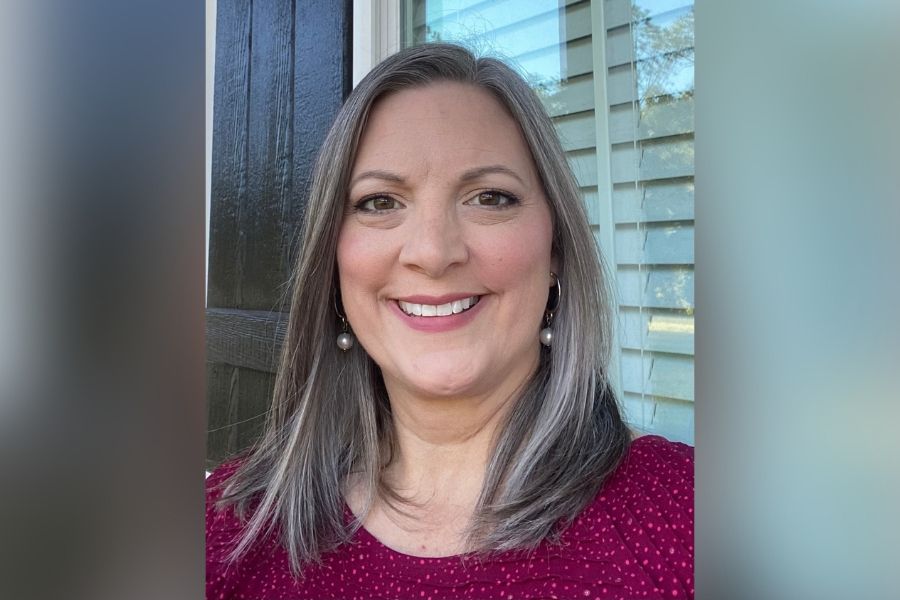
The decision came with fear and grief.
"Coming to terms with the loss of a part of myself that I associated with my femininity was incredibly difficult," Lisa said.
The weeks between surgery and receiving a permanent prosthesis were especially hard. Lisa was looking for something to fill that gap when the office of Dr. Pamela Strickland, a breast surgeon at Cherokee Breast Care, gave her a pair of Knitted Knockers.
"I thought they were absolutely adorable," she said. "At a time when I needed encouragement, they brought me a sense of joy and comfort."
Putting them on for the first time took some getting used to. But as she saw how they restored her appearance, her confidence began to return.
"For the first time since my surgery, I felt a little more like myself again," she said.
From one newspaper article to hundreds of pairs
The guild got involved with the Knitted Knockers Support Foundation in 2014, when Amy's sister-in-law sent her a newspaper article about the nonprofit's mission to connect volunteer knitters and crocheters with breast cancer survivors to provide free bra inserts.
Amy, then the guild's charity co-chair, proposed it as a new cause.
That first year, members knitted 85 knockers. This year, members set a goal of 200 knockers. They have already surpassed it.
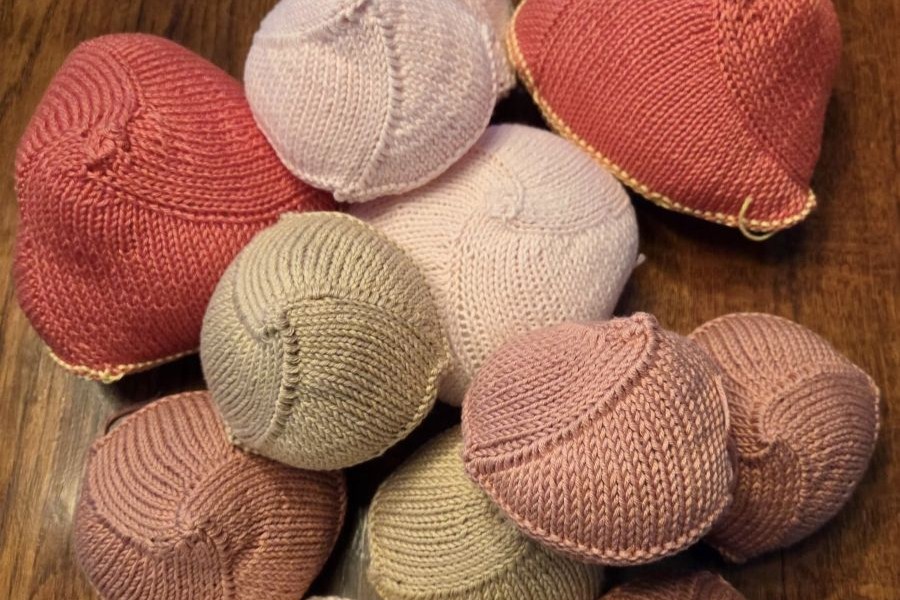
The process is simple but careful. Knitters must use specifically approved extra-soft cotton or bamboo yarns and follow patterns provided by the support foundation. One knocker takes about five hours depending on the size. Amy then stuffs them with polyester fill and packs them into zip-top bags with a care sheet and the guild's business card.
Placed in a regular bra, they take the shape and feel of a natural breast. Their size can be adjusted by removing some of the stuffing and can be worn with a sports bra, mastectomy bra or post-surgery camisole.
Sharon Coleman, a guild member who delivers many of the finished pairs, said she has heard from women who found traditional prostheses heavy and warm, especially during treatment, when body temperature can swing from chilled to sweaty. Knockers are lightweight and breathable, and they can be tossed in the washing machine once the stuffing is removed.
Made by women who've been there
For many guild members, the value of the knockers goes beyond comfort and practicality.
Sharon, 77, was diagnosed with breast cancer in 2008 after a mammogram. In 2025, damage from radiation she received during treatment led to a mastectomy. While she did not use Knitted Knockers herself, creating them has become a way to give back.
"When I'm working on my project, I'm just saying different little prayers and hoping it touches the person that would be receiving this," she said.
In Amy's case, she was diagnosed in 2000 and again in 2017. She chose simultaneous mastectomy and reconstruction both times, but she hopes the women who receive them know they're made "with care, concern and compassion for what other women may be going through."
For Lisa, the personal touch of receiving a handmade gift from someone she had never met made it more than just a practical item.
"It was a reminder that people care and that I wasn't facing this journey alone," she said. "It was a small act of kindness that had a very big impact on me."
Grace for the road ahead
What comes after mastectomy looks different for every woman. Sharon tells newly diagnosed women to weigh the pros and cons of each option and decide what's best for them, and all three women stressed the importance of extending grace to oneself.
"There were times when I looked in the mirror and didn't recognize the person looking back at me," Lisa said. "It takes time to adjust, and healing isn't just physical. It's emotional, too."
Amy acknowledges the reality that the feelings may not fully fade. Even years later, she still feels self-conscious about how breast cancer changed her body. Some days are harder than others, she said.
"I think one of the most difficult things after breast cancer is realizing your body image is forever changed and making peace with that," she said.
She encourages women to use the aftercare services their health care team offers and to try different options — bras, camisoles, prostheses or knockers — until they find what feels right.
"Most of all, remember you are still you, even though your body has changed," she said.
LEARN MORE ABOUT KNITTED KNOCKERS.
