
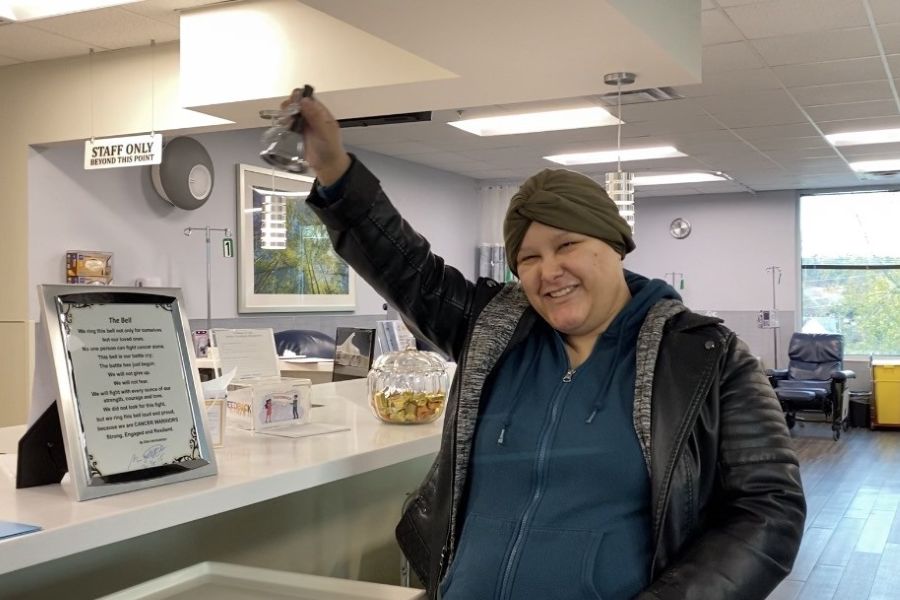
When Francys Hernandez was diagnosed with cancer at 34, every step forward felt like walking into a dark room.
She didn’t know what to expect. She didn’t know anyone who had gone through cancer, and suddenly she was facing surgery, chemotherapy and not one but two cancer diagnoses of her own.
“The unknown,” she said, was one of the hardest parts of her cancer journey. But having a team that stood beside her and understood what she was going through helped Francys navigate her cancer diagnoses.
Now, as she continues her recovery, the Norcross resident is turning her experience into a source of hope for other patients.
Facing the darkness
Francys learned she had uterine cancer in May 2024 after surgery to remove uterine polyps. For years, she had experienced extremely heavy, painful periods that sometimes lasted for months.
She was excited at the possibility of finally being free from debilitating periods. Instead, the pathology results showed she had stage 1 uterine cancer.
“My first thoughts were dark,” she said. “Of course I would die when life was finally going OK.”
She had just accomplished some of her lifelong dreams. She was living on her own with her then-boyfriend, now husband, and their two cats. She had a job she loved as a graphic designer and a great boss.
But she also felt betrayed by her body.
“I felt like my body had broken down, that I had a ticking time bomb in my body that would kill me any second,” she said.
Francys was referred to Northside Hospital Cancer Institute, where she began seeing Dr. Stephen Salmieri at Georgia Gynecologic Oncology in Lawrenceville. He recommended a complete hysterectomy, and during surgery, he noticed lesions on Francys’ left ovary. He sent samples to pathology, and the results showed that she also had stage 2 ovarian cancer.
She started chemotherapy in August and received six months of treatment under the care of doctors Christopher Hagenstad and Aldemar Montero, medical oncologists with Suburban Hematology-Oncology Associates in Duluth.
Francys also underwent genetic testing. Although she did not have a BRCA gene mutation, her ovarian tumor did.
BRCA genes are responsible for producing proteins that repair damaged DNA. Since only her tumor had the mutation, that meant that she did not inherit a harmful copy of the genes. Instead, the mutation happened at some point in her life during the natural process of cell division.
Because the tumor had a BRCA gene mutation, Francys qualified for Lynparza, a targeted therapy that can help reduce the risk of recurrence for certain cancers. It's something she may have to take for a few years.
Taking it one day at a time
Today, Francys continues to have regular follow-up appointments. She is still adjusting to a new normal after surgery and chemotherapy, and taking Lynparza can leave her feeling tired.
But “with every checkup and doctor visit, I see my body getting better and better,” she said. “Sometimes I just need to remind myself to be patient with my body.”
She still worries sometimes about what would happen if the cancer returned. To cope, she leans on her husband, her mother and her best friend — and she makes a plan.
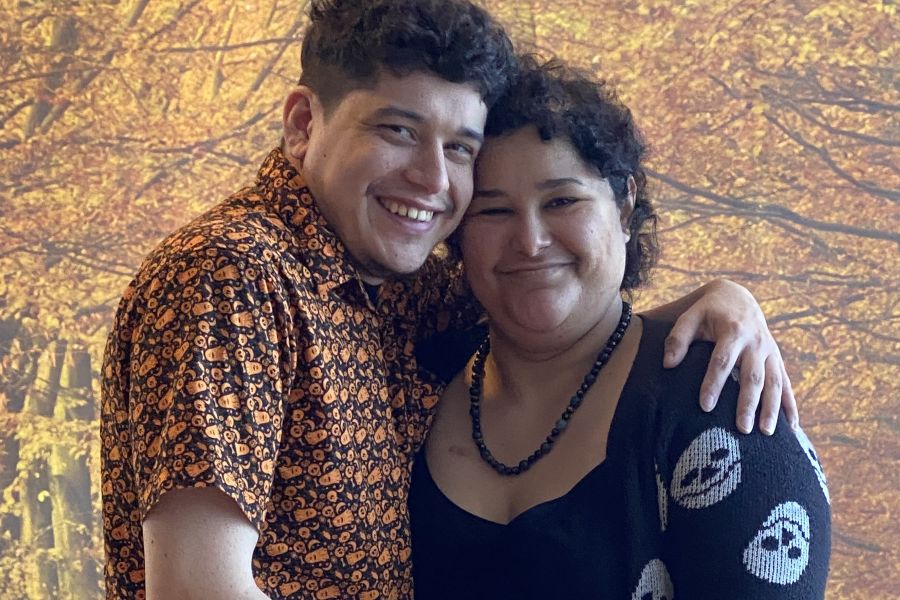
“It helps me face my fears and makes the worst-case scenario not so scary anymore," she said.
Then she takes a breath and reminds herself to focus on the present, on the fact that she is still here and can enjoy the life she has built.
Reframing uncertainty into hope
For Francys, her medical treatment was only one part of her experience. Having a team that supported her beyond her medical care was crucial to her journey.
A nurse navigator checked in with her regularly. Someone helped her with financial assistance. She received support for her mental health and even worked with a nutritionist.
"Northside went above and beyond my expectations, especially during such a vulnerable moment in my life," she said.
Part of that team also included Northside's Network of Hope volunteers, many of whom have experienced cancer themselves. Now, Francys herself is a volunteer, visiting patients who are sitting in the same treatment chairs where she once sat.
She encourages them to take their journey one day at a time — and to give themselves patience, love and grace.
“It’s OK to be scared,” she tells them. “You are braver than you think."
Looking back, Francys wishes she had understood sooner that cancer does not automatically mean death, and she tries to remind others of that, too.
"Medicine has thankfully come a long way," she said. "Help and hope are out there."
LEARN MORE ABOUT UTERINE CANCER CARE AT NORTHSIDE.
*The health story shared here is for informational purposes only and is not medical advice. Patients should consult with their own physician before making medical decisions.
