
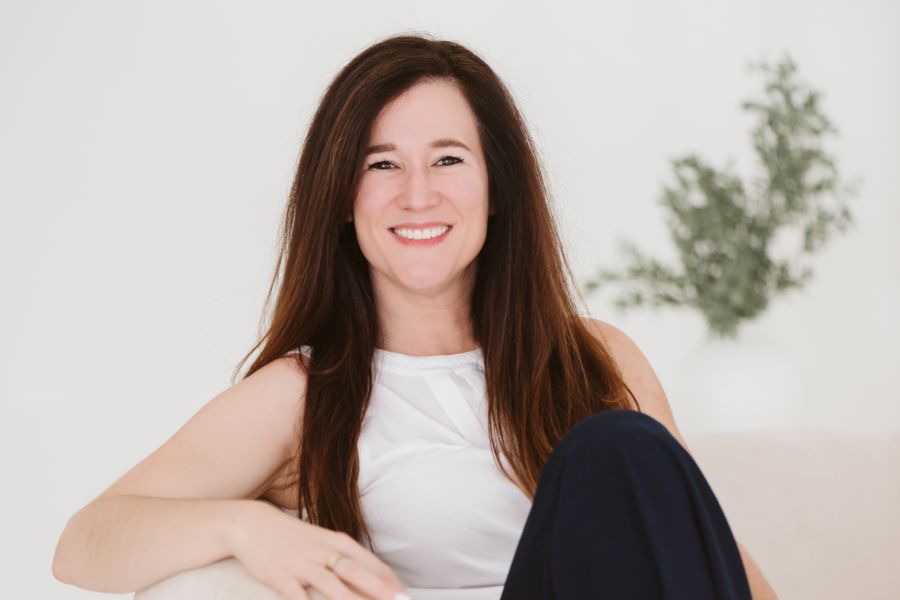
For years, Laura Carmody avoided a test that could answer her biggest health question.
Her father, who had pancreatic cancer, tested positive for an inherited gene mutation before he died in 2017. He urged Laura and her brother to get tested too. Her mother had died of brain cancer two years earlier. Laura, a Marietta resident, knew what the test might reveal, and she was afraid.
"I had a hard time grappling with how I would cope if I was positive," she said.
It took her years to find the courage. When she finally got tested in 2021 at age 37, the result was positive. She carries the same mutation as her father, which raises her risk for breast, ovarian and pancreatic cancers.
Laura, now 42, has never had cancer. Her story shows why knowing your inherited risk matters for those with a strong family history. Genetic testing can reveal whether a mutation is at play, and that knowledge can shape decisions about screening and prevention before cancer ever develops.
"A positive genetic test is not a diagnosis, and it does not mean cancer is certain," said Dr. Iqbal Garcha, medical director of Northside’s High Risk Program. "It means we understand a person's risk better, so we can tailor screening and talk about prevention options early. If cancer runs in your family, especially if a relative carries a known gene mutation, ask your doctor whether genetic counseling and testing are right for you."
Finding a clearer path
What moved Laura to get tested were relatives who carry the same mutation. They helped her see that a positive result was not the end of the story. It was a chance to act early.
After testing positive, she first sought care at another health system and started regular screenings, as recommended for people with her mutation. When she asked whether she should consider a preventive mastectomy — surgery to remove healthy breast tissue and lower cancer risk — she said the answer was neutral and offered little guidance.
Lauren Walch, program director at the Cancer Support Community Atlanta, where Laura facilitates support groups, suggested she visit Northside Hospital's high-risk clinic. Laura said what set the clinic apart was an individual risk assessment built from her family tree.
The team estimated her lifetime breast cancer risk at 62%, Laura said. That was slightly above the 40% to 60% range she had been told was typical for her mutation.
"That was really influential," she said. "Basically realizing that I'm probably going to get it, so let's be proactive."
A full calendar and a hard decision
Laura's routine has included near-constant monitoring. Each year, she alternates an abdominal MRI with an endoscopy to watch for pancreatic cancer. For ovarian cancer, she has an ultrasound and blood work every six months. And before her surgery, she alternated a breast MRI and a mammogram every six months.
"I feel like I'm constantly at the doctor," she said. "It's like three hours out of your day, maybe more."
In July 2026, Laura had the double mastectomy. She said the physical recovery was only part of it. She felt grief for the loss of parts of her body that were tied to her sense of womanhood, and for the family members she had lost. Some people, she said, offered unwanted opinions. Some compared the surgery to a "boob job."
"That's far from it," Laura said.
She leaned on therapy, her spouse, family and friends. She met with her therapist weekly and considered going twice a week during recovery. Today, she says she is glad she had the surgery.
"I feel tremendous relief after going through the grief process," she said.
Looking ahead
Laura's care is not finished. She still has regular screenings for ovarian and pancreatic cancers. Her team has recommended removing her ovaries between ages 45 and 50, she said, in part because ovarian cancer screening is less reliable and the disease is often found at a late stage.
Even knowing her genetic risk, Laura no longer sees cancer as inevitable. She puts her pancreatic cancer risk at about 10%, she said, and focuses on what she can control. That includes eating mostly fruits and vegetables, limiting ultra-processed foods, exercising and caring for her mental health.
"If cancer is in your family, I think it's responsible to get genetic testing," she said.
Her relatives gave her the same advice. Knowledge is power, they told her, and without it, Laura said, "you're just kind of playing roulette."
LEARN MORE ABOUT THE NORTHSIDE HOSPITAL CANCER INSTITUTE HIGH RISK PROGRAM.
*The health story shared here is for informational purposes only and is not medical advice. Patients should consult with their own physician before making medical decisions.
