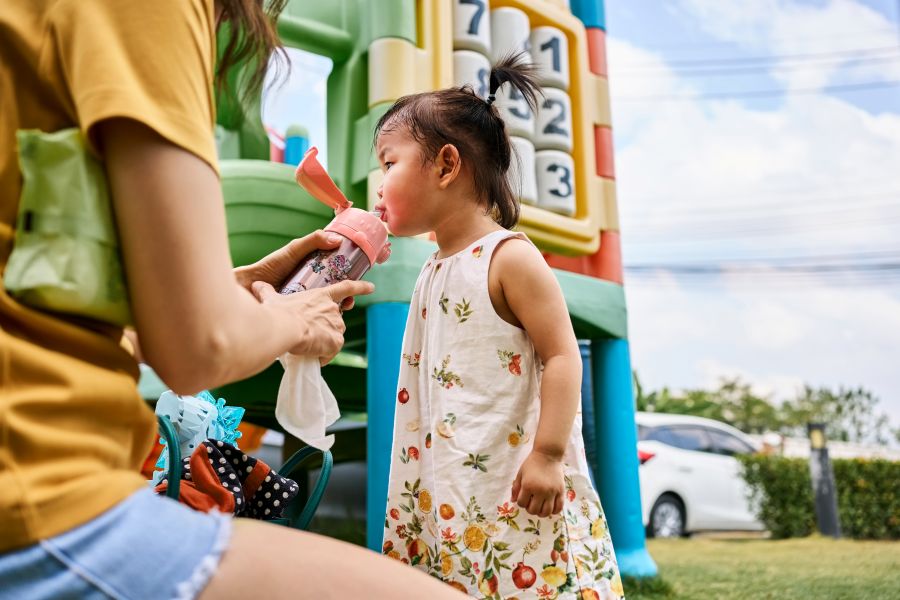
Summer means more time outdoors, family vacations and plenty of opportunities for fun. But with higher temperatures and increased time in the sun and water, parents should take extra precautions to help keep children safe.
According to pediatrician Dr. Jamie Rollins, with Northside Cherokee Pediatrics, taking simple precautions can help children stay safe while enjoying everything summer has to offer.
Protecting children from the sun
Sunburn prevention should be a priority, Rollins said, noting that even a tan is a sign of skin damage.
"Protecting children's skin early in life can help reduce their risk of melanoma and other skin cancers later on," Rollins said.
Parents can help prevent sunburn by dressing children in lightweight, sun-protective clothing and wide-brimmed hats and limiting outdoor activities between 10 a.m. and 4 p.m., when ultraviolet rays are strongest.
Rollins recommends mineral-based sunscreen containing zinc oxide or titanium dioxide because they are safe and effective. She advises parents to avoid spraying aerosol sunscreen directly on children, especially near the face, because inhaling the product can trigger coughing or irritate the airways.
Even with precautions, sunburn can happen. Children who develop sunburn should drink plenty of fluids and avoid additional sun exposure until their skin has healed. Cool baths, pure aloe and age-appropriate doses of acetaminophen or ibuprofen may help relieve discomfort.
Babies younger than 6 months require extra protection. Rollins recommends keeping infants in the shade whenever possible and dressing them in lightweight clothing that covers their arms and legs. Parents should avoid covering strollers or car seats with regular blankets because they can trap heat and create unsafe temperatures.
Staying safe around water
Whether spending the day at the beach or swimming in the backyard pool, children require close supervision around water.
"If a child cannot swim, they should be wearing a properly fitted life jacket whenever they're in the water," Rollins said.
She cautions parents not to rely on water wings, puddle jumpers, or other flotation devices in place of U.S. Coast Guard-approved life jackets.
Parents should establish rules that children must ask permission before entering the pool and designate a "water watcher" whose only responsibility is supervising swimmers. Young children and those learning to swim should remain within arm's reach of an adult. Older children should always swim with a buddy.
At the beach, families should check the area for hazards such as broken glass or shells before allowing children to play. Sand holes should never be deeper than a child's knees because they can collapse and become dangerous. Parents should also monitor weather conditions, follow beach warning flags and choose beaches with lifeguards when possible.
Recognizing heat-related illness
Georgia summers can bring extreme heat, increasing the risk of dehydration and heat exhaustion.
"Heat illness can happen faster than parents realize," Rollins said. "Sometimes it sneaks up on you."
Staying hydrated is one of the most important ways to prevent heat-related illness. Children who spend long periods outdoors should drink water regularly and replace electrolytes when needed. Babies younger than 6 months may need additional formula or electrolyte solutions as directed by their pediatrician.
Parents should dress children in light-colored, breathable clothing and encourage regular breaks in the shade or indoors to cool down. Cooling towels and water misters may also provide relief during sports practices and other outdoor activities.
Signs of heat exhaustion include excessive sweating, flushed skin, rapid breathing, dizziness, nausea, vomiting and an elevated body temperature. If symptoms develop, parents should move the child to a cool location, loosen clothing and encourage small sips of water or electrolyte drinks. Cool compresses may help lower body temperature.
A child who develops a high fever, stops sweating, becomes confused or loses consciousness may be experiencing heat stroke, which is a medical emergency. Parents should call 911 immediately.
"Summer should be a time for families to enjoy being together," Rollins said. "Taking a few simple precautions can help keep children healthy, happy and safe all season long."