
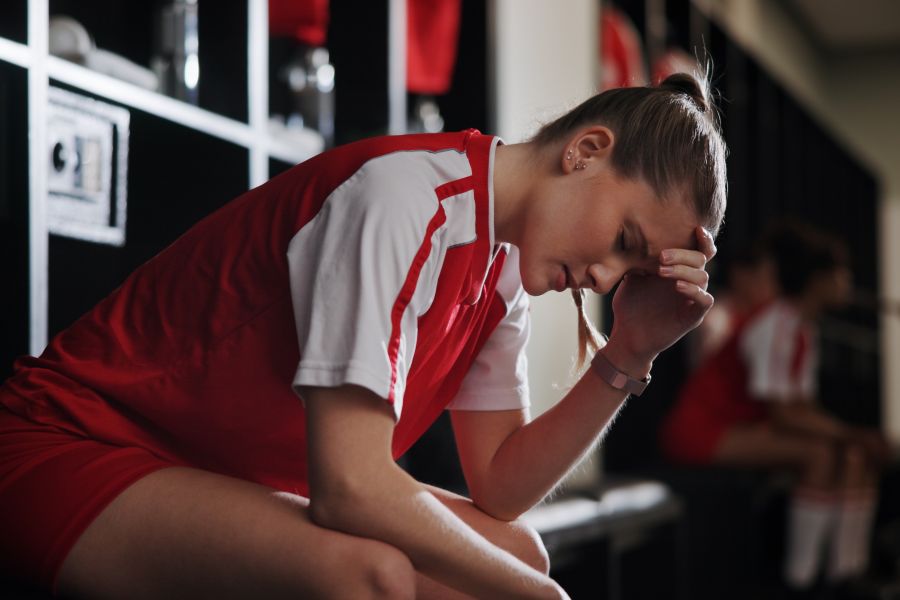
Dizziness, vomiting, memory issues — “traumatic brain injury” or TBI is a phrase no parent ever wants to hear. When there’s a young athlete in the family, they hear it often. Northside Hospital’s world-class concussion expert Daniel Charek, PhD, came forward to explain the realities behind one of youth sports’ highest concussion rates: girls’ soccer.
How common are concussions in girls’ soccer?
In youth sports, concussions — a type of brain injury — are common. A 2010 to 2016 study discovered 283,000 children sought care in a U.S. emergency department every year for a sports- or recreation-related TBI. This doesn’t tell the whole story.
As many as 50% of concussions go unreported each year, with up to 3.8 million concussions estimated annually. To many Americans, it may be no surprise that boys’ tackle football — the nation’s most popular contact sport — is responsible for the highest concussion rate in youth sports.
FIFA World Cup 2026 recently whipped Atlanta and the rest of the nation into a more worldly football frenzy. For parents and young players setting their sights on soccer for the first time, the Centers for Disease Control and Prevention has a “Heads Up.” Girls’ soccer has the second highest concussion rate among all youth sports.
“We see tons of female athletes throughout the year who have sustained concussions,” Charek said.
The neuropsychologist specializes in the assessment and management of concussions and is among a team of specialists that make up Northside’s comprehensive and cutting-edge Concussion Program.
“Soccer tends to be our highest rate of concussion for our female athletes,” he later added.
Why is the concussion rate so high in girls’ soccer?
According to the CDC, on the high school level, soccer players most commonly become concussed from player collisions during heading. Around a third of all concussions among female players occur because of heading scenarios.
"A good percentage of our female soccer concussions, and just soccer concussions in general, are heading related,” Charek said.“ A lot of those will be head-to-head clashes that we'll see. You also can get some from poor technique on headers. That's where technique's really important.”
According to the expert, proper heading technique can greatly reduce concussion risks. Female athletes, statistically, are also facing a higher concussion risk.“
When you hold the level of contact or level of sport consistent, we see this consistent trend where our female athletes appear to sustain concussions at a higher rate,” Charek said.
But why?
"It's a good question, and it's something we're still trying to understand,” Charek said. "There are several hypotheses about why that may be. One is a potential hormone-based explanation.”
The neuropsychologist said female athletes tend to be more prone to migraines — a risk factor for concussion.
"And we know our female athletes tend to have thinner necks, and maybe a little bit less neck strength on average,” Charek said. “That is another potential explanation for it.”
The concussion expert said self-reporting may be a factor too.
"There's been some suggestion maybe our female athletes are just more willing to disclose their symptoms or at least talk about some of the symptoms that come with concussions.”
Charek stressed modern medical science still doesn’t have a 100% clear explanation for why female athletes appear to be more prone to concussions.
"But I think those are all reasonable hypotheses that might kind of contribute to this overall picture that we get,” he said.
How to identify concussion symptoms
If a player suffers a concussion, self-reporting the TBI is paramount.
“Sometimes you can see something, like a loss of consciousness, someone who's clearly amnestic or unable to remember details prior to or following the injury,” he said.
“They might be disoriented, not know the time of day or score of the game. Those are easier because those are some pretty observable signs. But the most reliable way is if someone gets hit and says, ‘Yeah, I have a terrible headache. I'm feeling dizzy.’ Those are important.”
Concussion symptoms include light sensitivity, dizziness, lethargy, headaches, nausea, vomiting, vision problems, brain fog, memory issues, irritability, anxiety, sadness, trouble sleeping, and loss of consciousness.
Even if only experiencing mild symptoms, any player who suspects they may have a concussion should avoid playing on the field any further.
“Taking another blow to the head while dealing with a concussion can make the injury much worse,” Charek said. “That is why being cautious and removing a player for evaluation is so important.”
For parents and coaches, Charek advised getting to know your athletes as well as possible.
"If you notice some deviations from their normal state of being, I think that's important,” he said. “If someone takes a really significant hit and over the next 10 minutes they make three uncharacteristic passes that you would never see before, I think that would be enough to bring them off to the side and be like, ‘Hey, we want to check in and see how things are going.’"
If ever in doubt, Charek advised, hold them out. It’s paramount that a concussed player does not continue to play. Continuing to take additional impacts after suffering a concussion can lead to more severe brain injury.
Northside Hospital’s Concussion Program treats active people of all ages and athletes of all skill levels.
LEARN MORE ABOUT THE NORTHSIDE CONCUSSION PROGRAM.

