
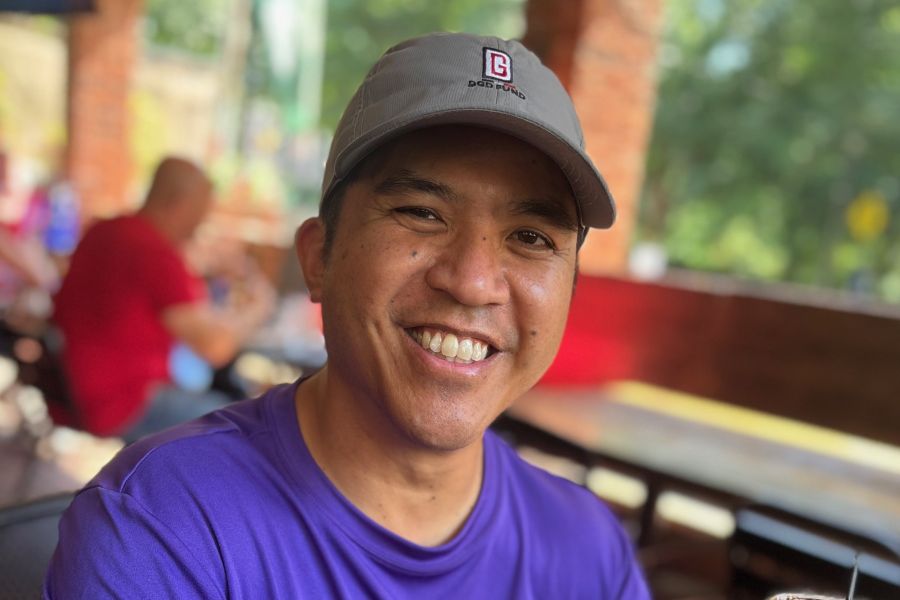
As Mike Trinidad prepares to line up for this year’s Peachtree Road Race, he knows exactly what awaits him.
The heat. The humidity. The hills.
For many runners, those are the biggest challenges of Atlanta's most famous Fourth of July tradition. But for Mike, 52, they are reminders of something he never takes for granted: the ability to be there at all.
"My number one goal every year is just to finish the race," the Peachtree Corners resident said. "It doesn't matter the time. It's going to be hot. It's going to be humid. It's going to be a grind. But I'm thankful that I can physically finish the race because I know not everybody is in that position."
His gratitude comes from experience.
In 2024, Mike was diagnosed with bladder cancer — his second cancer diagnosis in 20 years. He had already registered for the Peachtree that year and initially hoped to still participate, but treatment ultimately forced him to sit out the race.
Instead, he focused on getting through treatment, which included 12 chemotherapy sessions over seven months at Atlanta Cancer Care.
Having previously faced stage 1 testicular cancer in 2004, Mike entered treatment knowing how to frame his own expectations.
"Do what you can when you can," he told himself.
Some days that meant staying active, mowing the lawn or exercising. Other days it meant giving himself permission to rest.
“I had to give myself some grace and say, ‘Hey, you're going through some stuff right now. Don't beat yourself up,’” he said.
Mike completed treatment in December 2024 and spent the following months rebuilding his strength. His first test came six months later at the Atlanta Cancer Care Foundation's Feather's 5K.
"I wouldn't say my stamina was up," he said. "That race was pretty rough, and that was only a 5K. So I knew I had some work to do to build up to the 10K."
Still, the event gave him confidence that a return to the Peachtree was within reach.
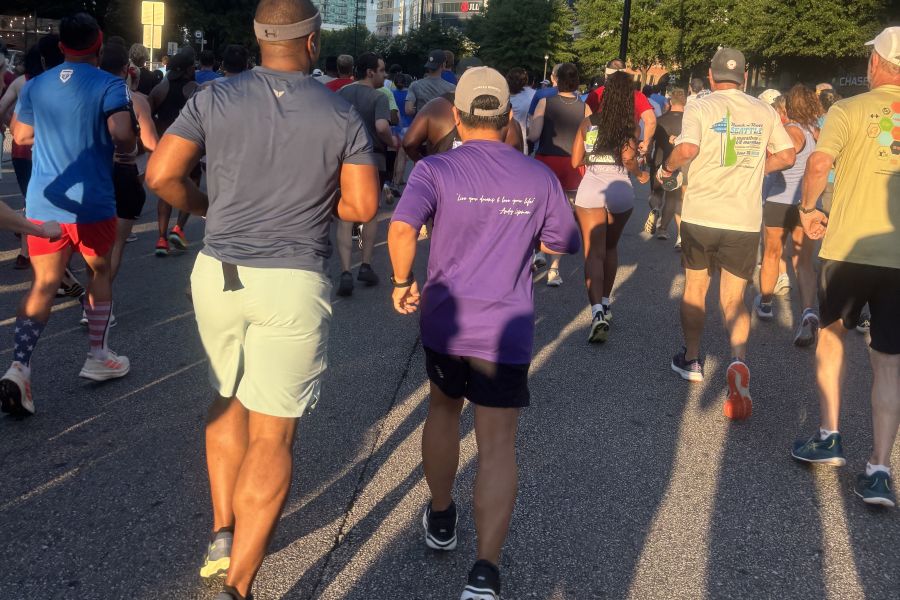
When race day arrived in 2025, Mike still wasn't sure if his body would allow him to run again.
"I was kind of like, 'OK, I'm back,' but also questioning, 'Am I really back? Am I going to be able to do this?'" he recalled.
But he did it. Through the heat and fatigue, Mike crossed the finish line.
Over the years, the Peachtree has taken on a deeper meaning for him. What began years ago as a personal challenge has become a way for Mike to honor others and keep perspective.
The portion of the race he finds most meaningful comes as he approaches the Shepherd Center near the summit of Cardiac Hill, where patients gather along the course to cheer runners up the steep incline.
"I tell myself, 'You better run. I don't care how much pain you're in, because those people on the sidelines would give anything to feel that pain you're feeling,'" he said.
The 2025 race also carried additional personal significance for Mike. He ran in memory of three people he had lost the previous year: a close friend with cystic fibrosis who had participated in the Peachtree since childhood, his father-in-law and his brother-in-law, who died of pancreatic cancer.
"When it was hurting or if it was hot, just thinking of them and thinking of their memories put me in a different mindset to keep moving," Mike said.
As he prepares for this year's race, those memories remain with him, along with thoughts of other friends facing cancer.
-and-friends.jpg "Mike (left) and friends")
Today, Mike still experiences neuropathy in his hands and feet from chemotherapy, but his scans continue to show no evidence of cancer. His surveillance appointments have been extended from every three months to every six months — another encouraging sign in his recovery.
For him, the Peachtree remains a personal challenge, but it's also a reminder of how far he's come. As he reflects on his journey, Mike remains grateful for the opportunity to keep moving forward — one step at a time.
"I will continue to use my experience to promote gratitude, mindfulness and resilience for as long as I live," he said.
LEARN MORE ABOUT NORTHSIDE HOSPITAL CANCER INSTITUTE.

*The health story shared here is for informational purposes only and is not medical advice. Patients should consult with their own physician before making medical decisions.
