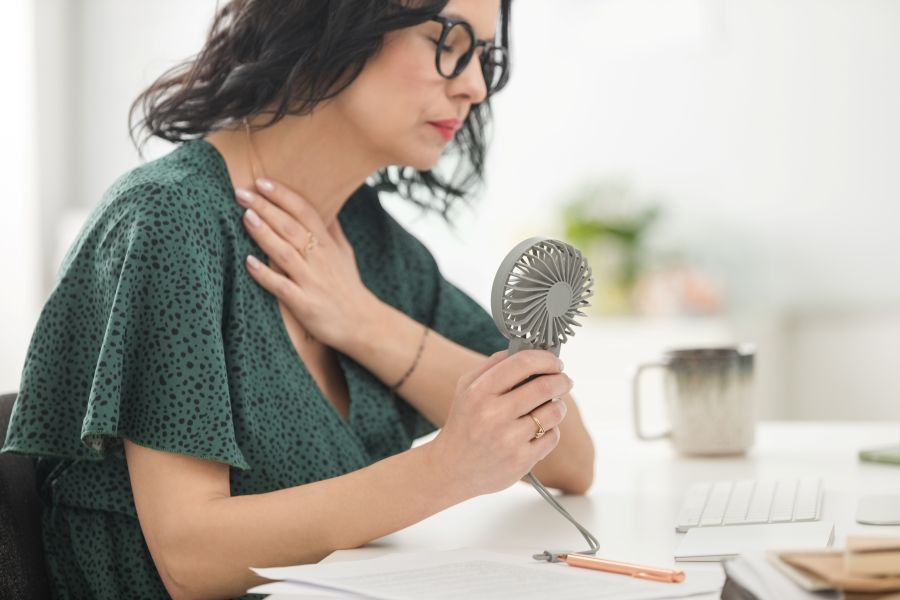
Menopause is a normal stage of life, but it is also one of the most misunderstood. Because they believe there is nothing that can help, women may spend years with symptoms they do not connect to perimenopause and may put off care. Advice from friends, family and social media often makes it more confusing.
At Northside Hospital, our women's health specialists see this every day. Many women spend years struggling with symptoms they don't realize are linked to perimenopause. Understanding the facts can help you get the care and support you need sooner.
Here are eight common myths, the facts behind them, and when it makes sense to talk with your provider.
Myth No. 1: Menopause starts when your periods stop.
Fact: Menopause is technically a single point in time, confirmed after 12 consecutive months without a period. The years leading up to it, called perimenopause, are when women notice the biggest changes: shifting cycles, trouble sleeping, hot flashes, mood changes or difficulty concentrating. Perimenopause can begin in your 40s, sometimes earlier. You do not need to wait until your periods stop to ask for help.
Myth No. 2: Menopause equals hot flashes.
Fact: Hot flashes get the attention, but they are only part of the picture. The transition can also affect sleep, mood, memory and focus, vaginal and bladder health, sexual comfort, and body composition. It is also a critical time for bone and heart health. Good menopause care looks at the whole woman.
Myth No. 3: A blood test can tell me if I am in perimenopause.
Fact: For most women over 45 with typical symptoms, perimenopause is diagnosed by reviewing symptoms and menstrual history, not lab results. Hormone levels can swing widely from day to day, so a single test often does not answer the question. Testing is most useful when symptoms start at a younger age or when your provider wants to rule out other causes, such as thyroid disease.
Myth No. 4: If my symptoms are normal, I just must live with them.
Fact: Common does not mean untreatable. If night sweats are wrecking your sleep, anxiety feels new, sex has become painful, or symptoms are affecting your work or relationships, that deserves attention. Both hormonal and nonhormonal treatments are available, and the right plan depends on your symptoms, health history and preferences.
Myth No. 5: Hormone therapy is dangerous for everyone.
Fact: Hormone therapy is not right for everyone, but it is not automatically unsafe either. It remains the most effective treatment for hot flashes and night sweats. For healthy women younger than 60, or within about 10 years of menopause, the benefits can outweigh the risks. Your age, medical history and personal risk factors all matter, which is why this is a decision to make together with a knowledgeable clinician.
It also helps to know that not all estrogen is the same. Low-dose vaginal estrogen treats dryness, painful sex and some urinary symptoms, with lower exposure to the rest of the body than a pill, patch or gel.
Myth No. 6: Midlife weight gain is just a lack of willpower.
Fact: If the same routine suddenly produces different results, physiology may be part of the reason. Midlife brings a loss of muscle mass, and the menopause transition can shift where the body stores fat. Poor sleep and stress make healthy habits harder. Rather than crash dieting, focus on eating enough protein, moving regularly and doing strength training, and getting quality sleep.
Myth No. 7: Snoring and exhaustion are just part of menopause.
Fact: Night sweats can disrupt sleep, but they may not be the only reason you wake up exhausted. Often overlooked in women, sleep apnea may disrupt sleep. It doesn't always show up as loud snoring. It can show up as insomnia, fatigue, morning headaches, mood changes, or sleep that never feels refreshing. If you snore, wake up gasping, stop breathing during sleep, or stay exhausted despite getting enough sleep, ask your provider whether a sleep evaluation makes sense.
Myth No. 8: Any bleeding change in perimenopause is normal.
Fact: Irregular cycles can be common. However, a qualified health care provider should assess irregular bleeding patterns. Talk with your provider about very heavy or prolonged bleeding, bleeding between periods or after sex, and any bleeding after you have gone 12 months without a period.
Midlife Is a Health Checkpoint, Not an Endpoint
Menopause is also an ideal time to look ahead. Bone loss speeds up during the transition, and heart disease risk becomes increasingly important. Knowing your blood pressure, cholesterol, blood sugar and family history, and asking whether you need a bone density screening, can help protect your health for decades to come.
No two women experience menopause the same way. The best care starts with listening to you.
Ready to talk about your symptoms? Northside Hospital's women's health specialists offer personalized menopause care, from symptom relief to long-term prevention.
LEARN MORE ABOUT WOMEN'S SERVICES AT NORTHSIDE.