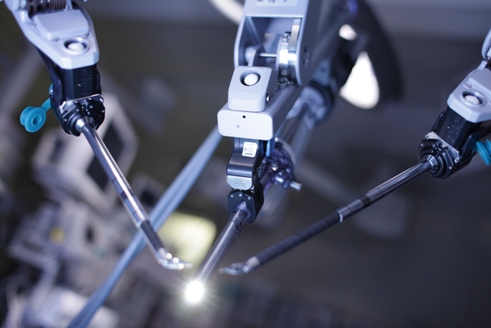
Thoracic surgery has undergone a dramatic transformation over the past century, and today’s patients are benefiting from safer, more precise and far less painful procedures. According to Dr. Ammar Asban, thoracic surgeon with Northside Thoracic Surgery, the driving force behind this change is minimally invasive and robotic technology.
"So why does minimally invasive matter? We all focus on patient outcomes, especially length of stay, post-op pain and complications, and this is where the robot really has the advantage," Dr. Asban explained.
From large incisions to tiny ports
In the early 1900s, lung and chest surgeries were performed through open thoracotomies, which required spreading or cutting ribs. While these operations helped establish modern cancer surgery, they came with a heavy toll. Dr. Asban noted that open thoracotomy had a high rate of post-operative complications and increased pain, leading to prolonged recoveries and delays in further cancer treatment. The 1990s brought video-assisted thoracoscopic surgery, or VATS, allowing surgeons to operate through small incisions using a camera. This reduced pain and sped up recovery, but it had limits.
As Dr. Asban put it, "It’s a very long instrument with a very limited articulation, especially on the wrist part of the instrument , and the video display in the VATS is only two-dimensional compared to 3D in robotic surgery."
Why the robot makes a difference
Robotic surgery builds on minimally invasive techniques but gives surgeons more control and better vision.
"The robot doesn't make decisions, the surgeon does. What the robot gives us is vision and precision: a magnified, three-dimensional view and instruments that move like a wrist inside the chest," Dr. Asban said. "The judgment about what to remove and what to preserve is still ours."
These advantages matter most in complex cancer cases. Robotic surgery has been shown to reduce conversions to open surgery and may allow surgeons to see and remove more diseased lymph nodes. In some cases, Dr. Asban said, this has led to “upstaging of some patients,” meaning their cancer was more advanced than previously thought. In other words, the robot gave doctors a more accurate picture of how far the disease had spread, allowing them to treat it more effectively.Today, robotic surgery has become the dominant minimally invasive approach. "As of today, about 70% to 80% of minimally invasive thoracic procedures in the United States are all performed by a robot," Dr. Asban said.
Finding and removing tiny tumors with precision
One of the newest breakthroughs is robotic bronchoscopy, which helps doctors find and mark small lung nodules before surgery. Using robotic technology, doctors can navigate deep into the lungs and inject a dye right next to a tumor, which increases surgical accuracy by 97%, Dr. Asban explained. "If you combine robotic bronchoscopy with intraoperative CT scan, the accuracy of up to 100%," he added.
This allows a “one-stop shop” approach in which diagnosis, marking and surgical removal can happen in a single visit, reducing delays and avoiding needle biopsies through the chest wall.
Teamwork behind every successful surgery
Even with advanced robots, great outcomes depend on teamwork. Dr. Asban emphasized that successful thoracic surgery relies on the efficient collaboration of many teams, from oncology and radiology to the surgical team and all the support staff in between.
This multidisciplinary coordination ensures that surgery, chemotherapy, immunotherapy and radiation therapy are timed correctly and safely.
What the future holds
The next generation of robots is already arriving. Intuitive Surgical’s new Da Vinci 5 includes "haptic feedback, meaning that you can actually feel the tumor," and "telepresence, where an experienced surgeon can proctor a complex case in real time from another institution."
"I have used that support, as well as provided it to other surgeons," Dr. Asban said. "I also co-founded an educational platform that teaches robotic thoracic surgery step by step, because this technology only helps patients if surgeons are trained to use it well."
Artificial intelligence is also on the horizon. AI may soon help predict which lung cancers are more aggressive, guide surgeons during operations and even evaluate cancer margins in real time.
As Dr. Asban summarized, "Minimally invasive, particularly AI robotic surgery, is now the standard when it comes to thoracic surgery. It has enhanced our precision and increased patient safety and excellent outcomes."
LEARN MORE ABOUT THORACIC SURGERY AT NORTHSIDE.