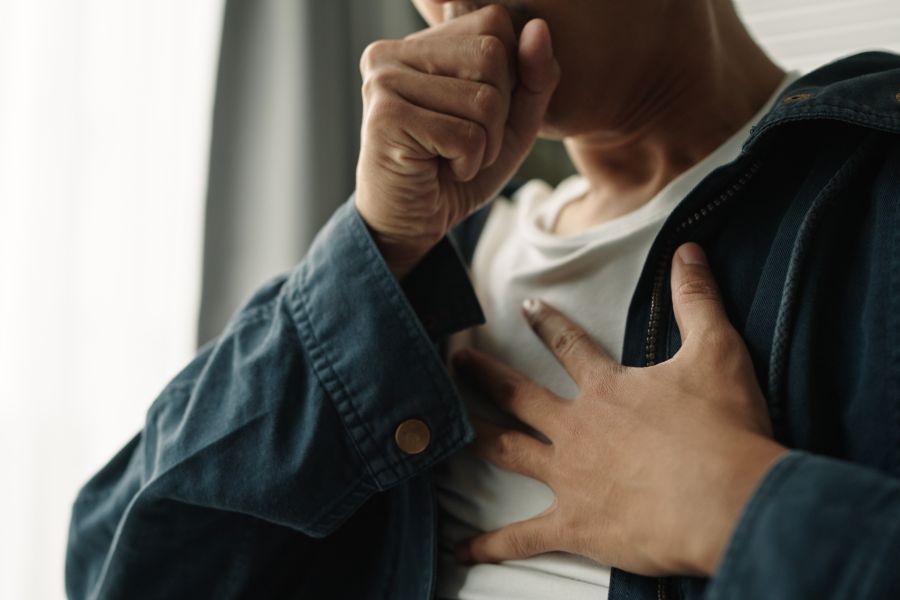
"How did I get lung cancer when I have never smoked?"
I hear this question often from patients who have just been diagnosed and are trying to understand why. They have never smoked and do not recall significant exposure to secondhand smoke, yet here they are, facing a diagnosis they never expected.
The short answer: Lung cancer can develop without smoking. But the link between smoking and lung cancer is so strong in people's minds that other possibilities are often overlooked. During Lung Cancer Awareness Month, I want to share what we know about lung cancer in never-smokers and what we are still learning.
Smoking is the leading cause but not the only cause
About 10% to 20% of lung cancers in the United States occur in never-smokers or people who have smoked fewer than 100 cigarettes in their lifetime, according to the Centers for Disease Control and Prevention. That adds up to roughly 20,000 to 40,000 cases each year.
Lung cancer is uncommon in young adults, but it does occur, even in people in their 30s. Never-smokers tend to be younger at diagnosis than those with smoking-related lung cancer, and women are more commonly affected than men. Neither age nor smoking history alone rules out lung cancer.
The most common type in never-smokers is adenocarcinoma. It is a form of non-small cell lung cancer that begins in cells lining the lungs' tiny air sacs, including cells that make mucus.
What are the risk factors for never-smokers?
Radon is one of the most important risk factors. The American Cancer Society ranks it among the leading causes of lung cancer in people who don't smoke. This naturally occurring radioactive gas comes from soil and rock and can build up inside a home. You cannot see or smell it.
Georgia's Piedmont and Blue Ridge regions have the state's highest levels of radon, according to University of Georgia radon test results from 1990 to 2024. The good news: Testing is simple and relatively inexpensive, and high levels can be reduced with a radon mitigation system.
Secondhand smoke is another established cause. So are certain workplace exposures, including asbestos, diesel exhaust, silica and some metal compounds. But not every chemical or solvent carries the same risk. Risk depends on the substance, the amount and how long the exposure lasts.
Indoor air pollution deserves attention as well. Smoke from fuels used for cooking or heating, and emissions from high-temperature frying, can be a concern, especially with repeated exposure in poorly ventilated spaces.
Outdoor air pollution is also a concern. Fine particles known as PM2.5, about 30 times smaller than the diameter of human hair, can travel deep into the lungs. Most of these pollutants come from vehicle exhaust, industrial emissions and other combustion, according to the U.S. Environmental Protection Agency. Recent studies link higher exposure to more cancer-related DNA changes and may help existing abnormal cells grow into tumors.
Researchers are still studying the long-term lung cancer risk of wildfire smoke, vaping and smoking marijuana. Not knowing the exact risk does not mean these exposures are safe.
Still, in some patients, we cannot identify one clear cause. Having a risk factor does not prove it caused a particular person's cancer.
Is lung cancer inherited?
Patients often ask whether lung cancer is genetic. It helps to separate inherited changes from changes found only in a tumor.
Most lung cancers are not explained by an inherited cancer syndrome. But inherited risk can play a role, and family history matters. If several relatives have had lung cancer, particularly at younger ages, tell your doctor.
Lung tumors can also carry acquired genetic changes that help the cancer grow. These are often called driver alterations, and people who never smoked are more likely to have them. While not passed down in families, some driver alterations are more common in certain populations. Researchers are still working to understand these patterns.
Symptoms you should not ignore
Early lung cancer often causes no symptoms, and some people stay active even when the cancer is advanced. Symptoms can also be mistaken for something else, such as pneumonia. Not every lingering cough is cancer, but persistent symptoms deserve follow-up. Finding cancer early often means more treatment options.
Contact your doctor if a cough lasts more than three weeks, or sooner if it is worsening.
Other symptoms that deserve attention include:
- Coughing up blood
- Ongoing chest pain
- Shortness of breath
- Hoarseness
- Pneumonia or bronchitis that keeps coming back
- Decreased appetite
- Unusual fatigue
- Unexplained weight loss
- A new lump or enlarged lymph node in the neck or above the collarbone
These symptoms often have other causes, but they need evaluation. Never having smoked should not end that conversation.
What you can do now
- Test your home for radon. Kits are available at hardware stores and online, and elevated radon levels can be reduced with mitigation systems.
- Avoid secondhand smoke, and do not start smoking or vaping.
- Improve ventilation when cooking, and pay attention to air quality alerts, including those for wildfire smoke.
- Share your family history and workplace exposures with your doctor.
- If you have a smoking history, check your screening eligibility.
Screening has been shown to lower lung cancer deaths in people at high risk, but screening is not currently recommended for people who have never smoked. For people at lower risk, it can find harmless spots that lead to anxiety, extra scans and sometimes unnecessary procedures.
Bottom line
Yes, you can get lung cancer even if you have never smoked. We may not always be able to explain why it happened, but that uncertainty should never become a reason for a patient to blame themselves.
Whether you smoke, formerly smoked or never smoked, you deserve to be heard, taken seriously and offered the best care available. If you have symptoms or questions about your risk, talk with your doctor.
LEARN MORE ABOUT LUNG CANCER CARE AT NORTHSIDE.