
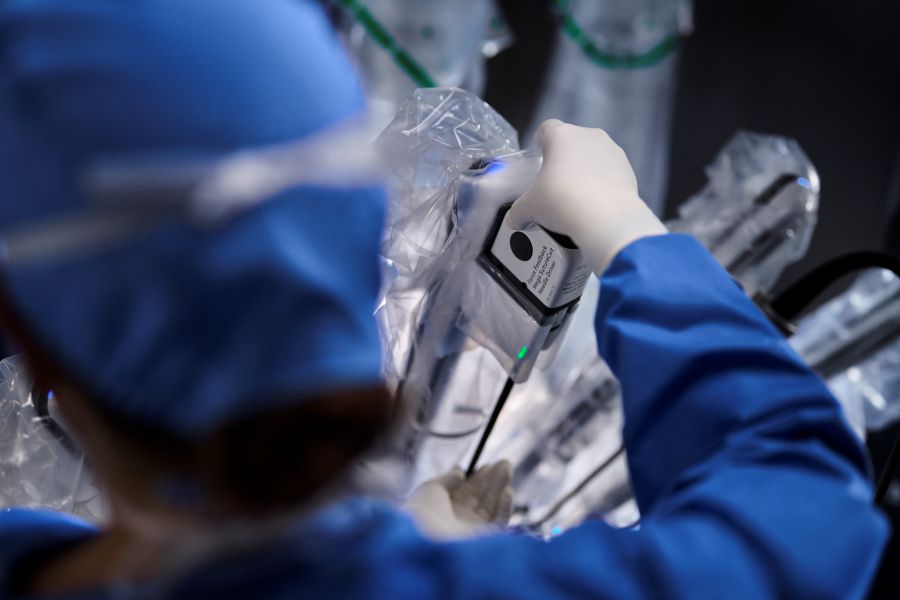
Robotic surgery has revolutionized the field of medicine, transforming the operative experience for surgeons, hospitals and, most importantly, patients.
For decades, laparoscopic surgery has provided a minimally invasive alternative to traditional open surgery. The introduction of robotic surgery further enhanced this approach, offering surgeons improved visualization, precision and dexterity for complex procedures across a range of specialties, including thoracic, urologic, gynecologic and abdominal surgeries.
Here are five things patients should know about this advanced surgical technique:
1. How robotic surgery works
Despite its name, robotic technology does not place a robot in control of your surgery. The system cannot make medical decisions or operate on its own. Rather, it requires that every surgical maneuver be performed with direct input from your surgeon. That’s why it’s important to choose an experienced robotic surgeon and surgical team.
Robotic surgery involves making small incisions for instruments and a camera, allowing the surgeon to view a magnified, high-definition (HD), 3-D image of the patient’s internal organs. The robotic arms, controlled by the surgeon, translate the surgeon’s hand movements into precise movements of the instruments. The superior quality of the HD video enhances the surgeon's skills by improving depth perception, contrast and magnification, while the robotic instruments provide a greater range of motion than traditional “straight-stick” laparoscopic tools.
The technology, combined with the skill and experience of the surgical team, can help support a safe procedure and recovery.
2. Benefits of robotic surgery
Robotic surgery may offer numerous advantages over traditional open surgery, including:
- Smaller incisions often mean less pain and scarring
- Reduced blood loss may decrease the need for transfusions
- Reduced risk of infection thanks to minimally invasive techniques
- Quicker recovery allowing patients to return to normal activities sooner
“Robotic surgery is particularly beneficial for surgery in tight or challenging spaces such as the foregut or the deep pelvis,” said surgical oncologist Dr. Malini D. Sur.
She often uses a robotic approach to treat patients with tumors of the stomach and pancreas.
“For example, when I perform a robotic total gastrectomy, I get a close-up view when dissecting around the junction of the stomach and the esophagus, as well as when suturing the esophagus to the intestine," she added. "I am impressed by the overall difference in ease of recovery I see in this group of patients.”
3. Applications across specialties
Robotic surgery is used across multiple surgical specialties. Northside Hospital is a leader in minimally invasive and robotic surgery, launching its robotic surgery program in 2005.
The hospital performs more than 10,000 robotic surgeries each year. With 32 robots, the technology is used across several specialties, including urology, gynecology, bariatrics and general and thoracic surgery.
Urologist Dr. Froylan C. Gonzalez has performed more than 3,000 surgeries using multiport and single-port robotic surgery, which allows the use of robotic technology through a single incision.
“When I first started doing robotic surgery, it was a novel option," he said. "Now, it is the standard of care.”
The benefits are clear, and the technology is constantly evolving.
"Single-port robotic surgery, for instance, allows all instruments to be inserted through a single two-inch incision, offering patients more freedom and quicker recovery," Dr. Gonzalez said.
4. The importance of experienced surgeons and teams
The success of robotic surgery relies heavily on the skill and experience of the surgical team. Dr. Srinivasa Gorjala, a bariatric and general surgeon, emphasized the importance of consistency and expertise: “Robotic surgery in comparison to laparoscopic surgery is like driving a Ferrari (robot) versus a Toyota Corolla (laparoscopic surgery)."
Both get the job done, he said, but the robot has the best technology, is often easier to use for the surgeon and is more efficient and ergonomic.
“All of this leads to better operative times and outcomes for our patients,” he said.
Dr. Gorjala uses robotic surgery for bariatric, GERD, gallbladder and hernia procedures.
At Northside Hospital, consistent use of the same surgical team can help promote efficiency and coordination. Dr. Gorjala noted, “We usually have the same surgical group on all my cases, so everyone knows their roles and we are very efficient and organized. This consistency leads to great outcomes with the robot.”
5. Continuous advancements in technology
The future of robotic surgery is promising, with advancements continually being made in technology and techniques. Dr. Gonzalez pointed out the upcoming innovations: “The new robotic surgery systems are coming with advanced computing power, AI and fluoroscopic techniques, which will provide more freedom and precision. We are excited about these developments and the improved outcomes they will bring.”
LEARN MORE ABOUT ROBOTIC SURGERY AT NORTHSIDE.


